




There's a certain kind of joy in watching new tools get pointed at old problems. Farmers flying drones over fields their grandparents walked. Piano techs pulling CT-scan geometry off a century-old action. I've been chasing a small piece of that feeling in my own shop, and this post is about where it's landed so far: 3D-printed replacement hammer tips for the Fender Rhodes.
This is early. I want to be upfront about that — I don't have long-term wear data yet, and some of what follows is going to age into either "told you so" or "well, that was naive." But the initial results are promising enough that I'd rather share them now and update as I go than sit on it.
Why bother?
New Rhodes hammer tips exist, and I'm genuinely thrilled that a few companies have gone the distance to manufacture them. That work matters. But every set I buy is money and lead time passed on to a client, and I'm always at the mercy of whatever durometers and formulae a supplier decided to offer.
Printing my own opens two doors. The obvious one is saving clients time and money — a tip I can make in my garage this afternoon beats one I order and wait on. The more interesting one is control over the formula. The original Rhodes tip spec was a six-zone hardness gradient, and being able to dial durometer myself — even potentially improve on the original curve — is the part that keeps me up at night in the good way.
TPU vs. neoprene
The original tips are a neoprene-family rubber. Neoprene fails in a way anyone who's opened an old Rhodes knows intimately: it hardens, glazes over, and eventually crumbles. That's cell-wall fatigue and oxidation doing their work over decades.
TPU fails differently. Its strengths are elastic recovery and abrasion resistance: it takes an impact, deforms, and springs back without the compression set that eventually kills neoprene. On paper it should be far more resilient to repeated strikes.
The honest caveat: foaming TPU (the soft stuff) complicates that story. More on that below. I'm not claiming "TPU beats neoprene" as a blanket statement — the failure modes are just different, and some of them I haven't observed yet.
What I printed
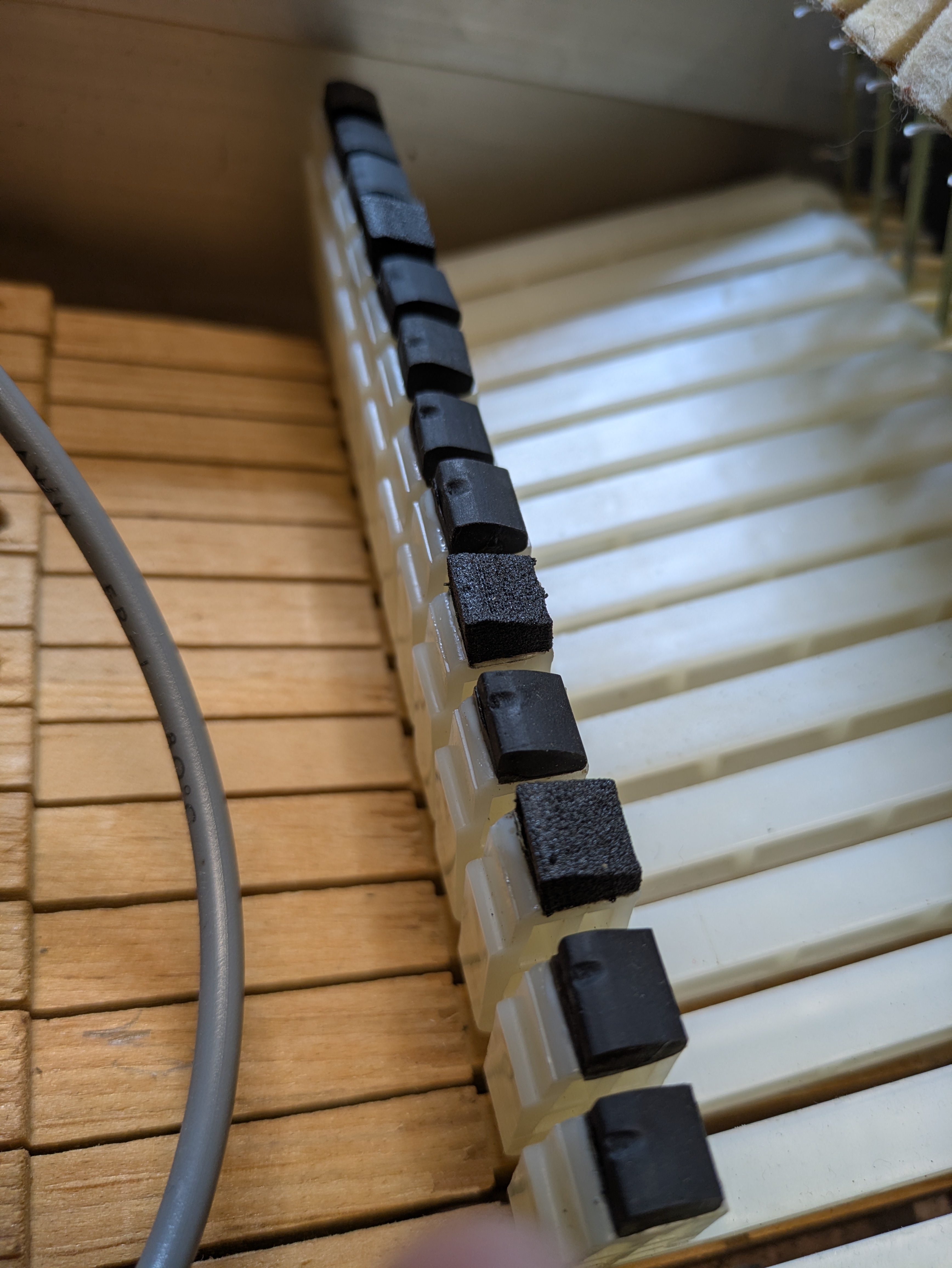
Dry your filament first — this matters more than any single setting below. TPU is hygroscopic; it pulls moisture out of the air, and foaming TPU like the AIR is especially sensitive because the moisture interacts with the foaming behavior. Wet filament gives you stringing, popping, and inconsistent extrusion. Worse for this application, it gives you an unpredictable effective hardness, since the foaming won't come out uniform. Drying it before every print made an enormous difference for me. Run it through a filament dryer (or a low oven) per the manufacturer's spec and keep it dry while printing if you can.
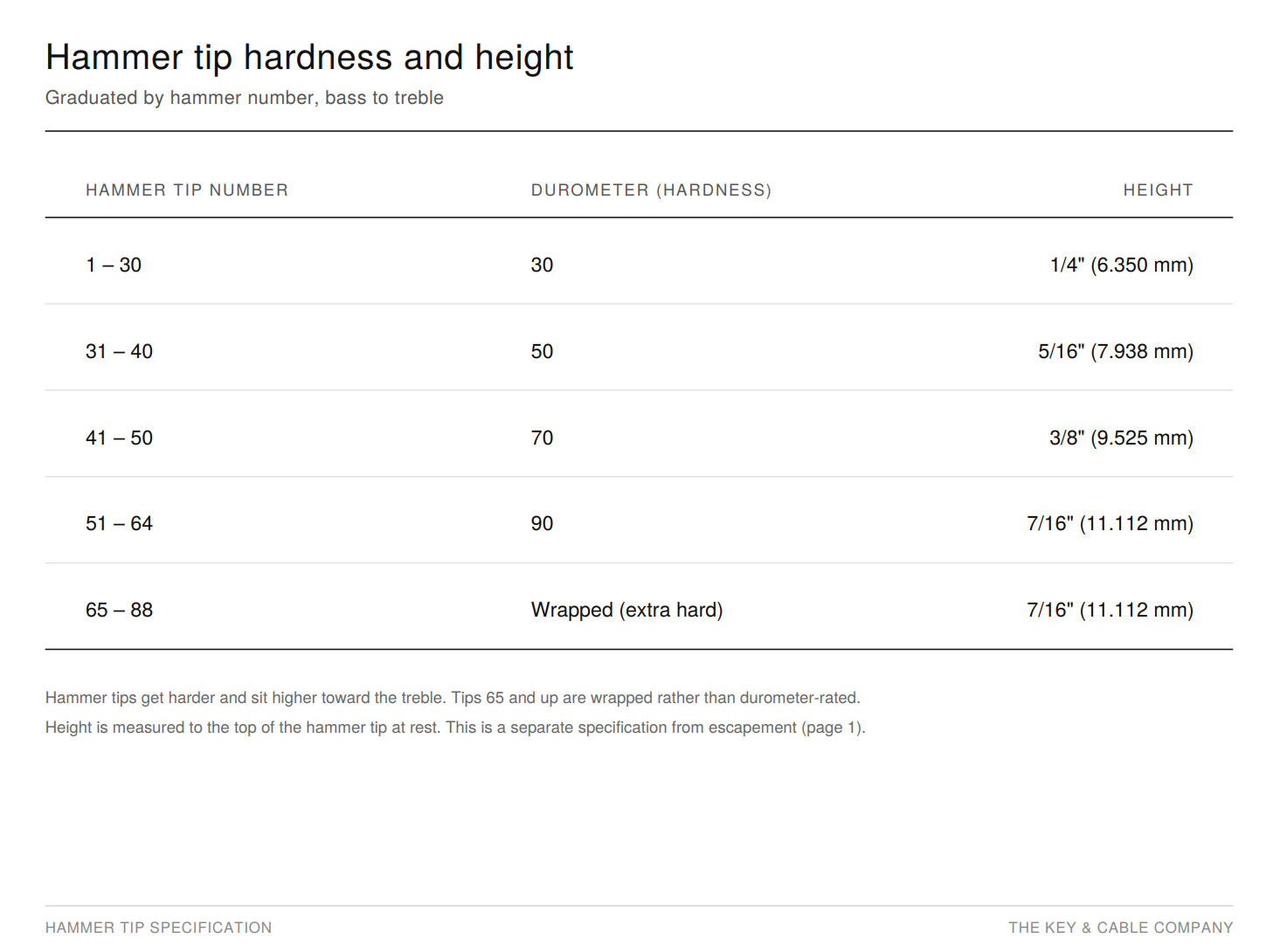
Soft tips (bass / mid) — ~40A effective
- Filament: Siraya Tech TPU AIR (foaming TPU)
- Nozzle temp: 270°C
- Layer height: 0.15mm
- Infill: 100%
TPU AIR foams as it extrudes, so the "100% infill" produces a part that's full of intentional microvoids — that's what gets you down into the 30–40A effective hardness range (Shore A). The result feels remarkably close to a broken-in original soft tip, and the attack it gives is warm and round. This is the one that surprised me most.
Firm tips (treble, ahead of the wooden-core section) — ~90A
- Filament: Amazon Basics TPU
- Nozzle temp: 250°C
- Layer height: 0.15mm
- Infill: 50%
Solid, dense, no foaming agent. These sit right before the wooden-core tips in the treble and, to my ear, sound excellent — tight, articulate, exactly what that zone wants.
How they sound
Subjectively: awesome. The 40A AIR tips give a soft, forgiving attack in the bass and mids, and the 90A tips bring the right snap up top. I'll caveat that "sounds awesome to me on my bench" is not the same as "measured against a reference set across a full voicing," and I want to do that comparison properly at some point. But as a first pass, I'm not fighting the sound — which, if you've voiced a Rhodes, you know is half the battle.
The wear problem
Here's the part I can't answer yet: I have no long-term wear data. These tips are new. What follows is what I'm watching for.
A hammer tip lives under a constant resting load and gets struck thousands of times in the same spot, and those are two separate things degrading it. Worth keeping them straight, because they fail differently.
The resting load is a compression set problem: hold a rubber under compression long enough and it doesn't fully spring back when released. That's permanent deformation, measured as the percentage of deflection that never recovers, and it's what slowly flattens the crown even when nobody's playing.
The striking is an impact fatigue problem: repeated deformation cycles gradually break the material down at the strike point, independent of any static load. Different mechanism, different timeline.
The number that actually matters for either isn't "did it wear through" but "did the crown flatten and the strike point shift." My plan is to pull a few test tips after a stretch of play hours and re-measure crown height and the strike-point flat. That's the real data, and I'll publish it when I have it.
Foamed TPU is the wildcard. Those microvoids that get me the soft hardness reading are also exactly where impact-fatigue cracks like to start. I fully expect the solid 90A tips to outlast the foamed 40A ones in raw cycle count. That's a trade, not a flaw — the AIR tips are buying a beautiful soft attack with some longevity. Worth knowing going in.
Heat. I'm in Florida. A Rhodes in a hot garage or on a summer gig sees real temperature swings, and foamed TPU softens more noticeably near its glass transition than solid TPU does. A tip that reads 35A on my bench might read softer at 40°C, and that shifts the voicing. I haven't characterized this yet, but it's on the list.
Files and settings
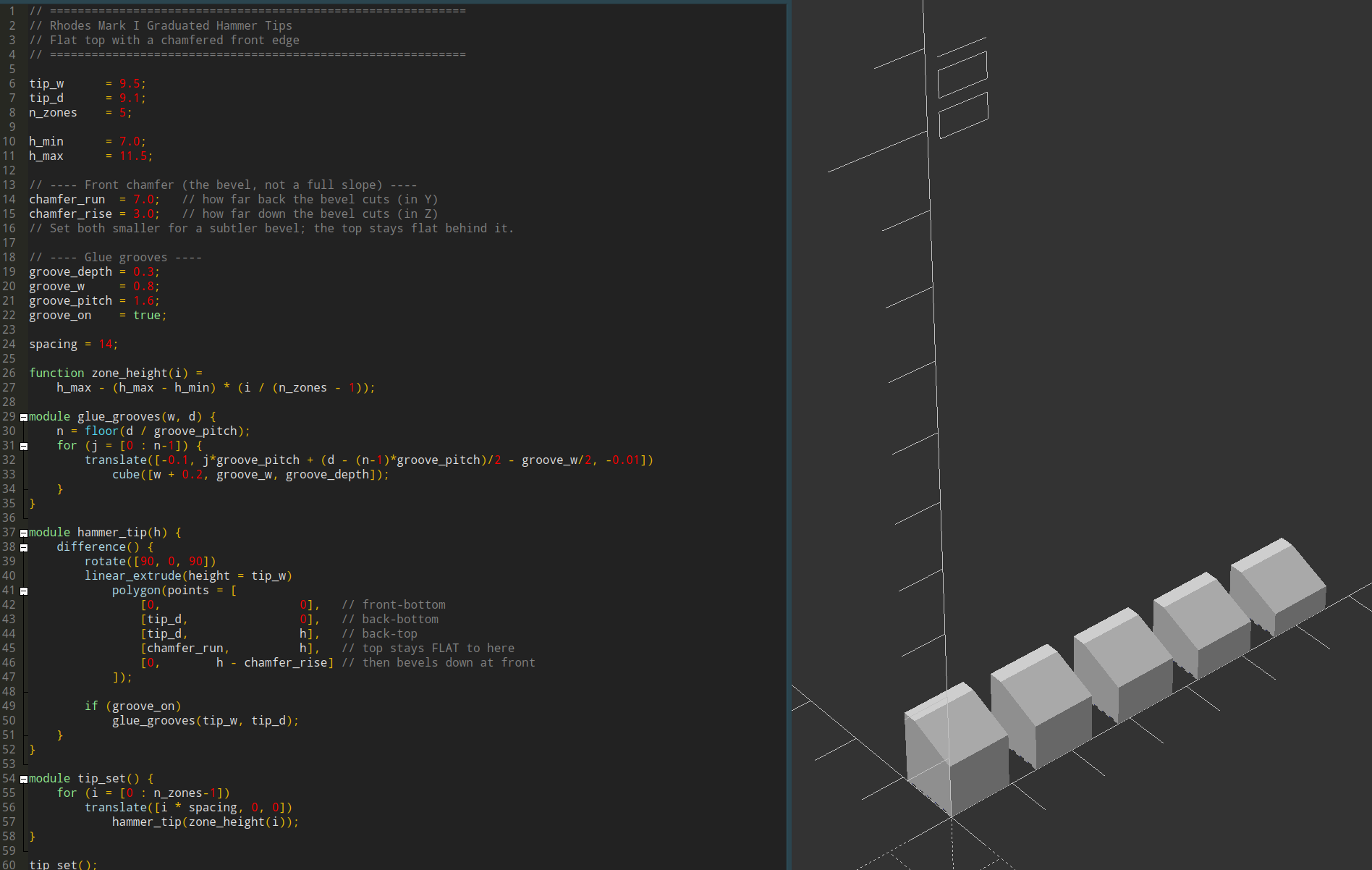
SCAD and STL files can be found in my Thingiverse profile.
My tips are parametric OpenSCAD: flat-topped with a front chamfer and serrated glue grooves on the underside for adhesion. I'll post the source so you can adjust geometry to your action. Print settings are above; start there and tune to your filament lot, because TPU — foaming TPU especially — varies batch to batch.
What's next
I want to keep pushing on this. If 3D printing can do for the Rhodes what it's already doing for piano restoration, that's a real gift to these instruments and the people who play them.
If you try this, I'd love to hear your results — especially wear numbers, since that's the data we all need and none of us have yet.
— Greg, The Key & Cable Company, Gainesville FL